#MyBoyCan

If you’re on my blog, you care about the well-being of our boys. If you care about the well-being of our boys check out Jennifer L.W. Fink’s website Building BoysThe website is chock-full of helpful articles written by Jennifer, a mother and award-winning author, and other contributors. A favorite of mine is: Yes, Boys Can Dance. The articles discusses the international movement #MyBoyCan founded by Sassy Harvey in response to ridicule her son received for participating in dance class – here is a podcast where the movement is described.

In the Yes, Boys Can Dance piece Jennifer writes:  “But this (is) about more than dancing. Ultimately, this is about enlarging our boys’ worlds and recognizing their full humanity. Collectively, we’ve busted the stereotypes that said women can’t wear pants or work or be mechanics or engineers. Today, you would never hear a news anchor laughing about a girl taking STEM classes. It’s time to bring that kind of equality to our boys also. Stop saying “boys can’t” and instead says #MyBoyCan.”

Also on the website you’ll be connected with other resources about raising boys, from others invested in the well-being of our boys and men. A favorite, which I’ve perhaps referenced before in the blog, having mom brain) is The Good Men Project.

So, what’s your response for #MyBoyCan?


Love The Boy You Got

Michael Thompson, Ph.D. has authored numerous books about boys and boyhood.  I have two of them sitting on top of one of my book piles: “Raising Cain: Protecting the Emotional Life of Boys” and “It’s A Boy! Yours Son’s Development From Birth to Age 18.” They are extremely important works that parents and educators should familiarize themselves with.

Here is Michael Thompson speaking about “Advice on Raising a Son:”

“Think of what you’ve liked or loved about the good men in your life….your husband, your father, a favorite uncle or grandfather or friend and speak openly of those qualities with your son.

Be attentive to your son’s own attributes, too, and let him know that you see him growing into a fine young man.

Love the boy you got.

Please don’t think about boys as a problem: don’t brace yourself for their energy or their competitiveness. Embrace it all.

Play with your son. Read to him. Sing to him. Laugh with him. Listen to him.”

Here is Michael Thompson speaking about boys as emotional beings:

“One of the most common disclaimers we hear from mothers talking about a problem their son is having is this: “I know my son is sensitive, but …” The inference is, of course, that most boys aren’t sensitive and that her son is somehow different because he is. That’s something our culture would have us believe, but it’s not true. All boys have feelings. They’re often treated as if they don’t. They often act as if they don’t. But all boys are born with the potential for a full range of emotional experience.

When researchers compare men and women or boys and girls on their emotional awareness, understanding, and expression, males almost invariably finish second. If boys and girls are given a series of pictures of faces showing different expressions, boys generally will be less accurate in their identification of the emotions that are being displayed. In therapy one of the most common complaints we hear from women about men is that men so often seem oblivious to the hurt feelings or emotional needs of others. Many men readily acknowledge that the generalization is true: they do prefer to avoid emotional people and situations. That doesn’t mean, however, that men lack the “wiring” for expressing or understanding emotion. Newborn boys, on average, are actually more emotionally reactive than girls. For example, studies show that baby boys cry more than baby girls when they are frustrated or upset.

Despite those expressive beginnings, the overall pattern is that–with the possible exception of anger, regarding which the research results are inconclusive–as boys get older, they express less emotion. This is true when they are observed in natural settings or when they are observed watching slides or film of emotionally arousing situations. Leslie Brody, a leading authority on gender differences, describes this as a “developmental shift in which males become less facially expressive of emotions with age, whereas females become more so.

So boys don’t show as much emotion. But does that mean that boys actually feel less? There is evidence that they may feel more. When heart rate or skin conductance–sweaty palms–are measured in emotionally arousing situations, there is no consistent pattern of differences between girls’ and boys’ responses. Studies that have shown a difference suggest that boys may react to a greater, not lesser, degree. Other research findings suggest that when boys get emotionally aroused, they may do less well at managing their emotion.”

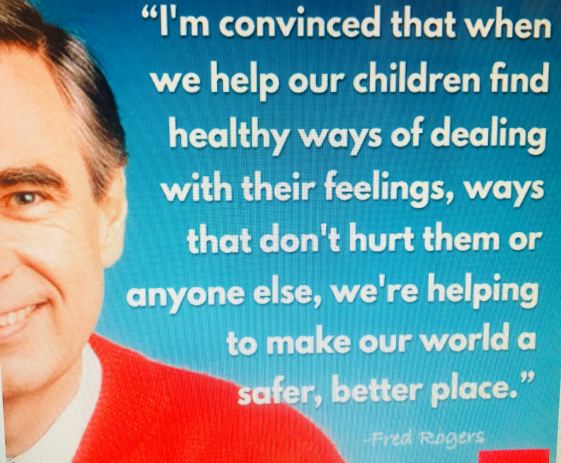
I often talk about the importance of helping our boys identify, manage, and freely express their emotions. I recently stumbled on: How to support emotionally sensitive boys. Being sensitive is a good. Being empathetic is essential. But when you consistently receive messages you shouldn’t be – you will need extra help in navigating heightened sensitivity….

Societal pressure expects boys to be emotionally resilient and avoid expression of feelings. Boys hear this message from a variety of sources, and often learn to stuff their emotions and downplay their reactions. This tough-it-out culture can be challenging for anyone, but particularly emotionally sensitive boys.

There are steps parents can take to help sensitive boys feel heard and understood while building coping skills and resilience.” They suggest helping your son access coping skills and having a calm home environment and ability to stay calm as a parent when he isn’t calm. Check out the article which speaks more to these strategies.


IMG_E4682.jpg

They Are Counting On Us – Part One

In her recent blog post, Sparking Joy For Our Boys: Marie Kondo and the Gillette Ad, Alana DiMario reflects on what we want (or don’t want) for our future and for our boys:

“Thanks to the ongoing work of the feminist movement, we have long had a model for thinking about and encouraging our daughters to step outside the roles that were traditionally defined for them. I can buy my daughter a navy blue “Strong Like Mom” t-shirt at Target, and no one blinks an eye at the fact that she has several favorite dinosaurs and not a clue about My Little Ponies. Women continue to fight their way into traditionally male-dominated arenas, and society is slowly continuing to adapt. As this new year dawns, we see highlighted in mainstream media the flip side to this coin: striving for equality means our sons also get to step outside the roles that have been traditionally defined for them, and lead lives that are more whole.”

I again find myself asking, what / where / how do we help our boys to challenge their traditional narrow gender role. I know the “who” – that’s easy, that’s all of us. As I keep asking these questions I am inspired that the “when” is now. Increasingly, my inbox is filled with friends sending me articles about Toxic Masculinity and gender roles. The urgency is clear, America is being governed by men who embody toxic masculinity. These current conversations are essential, our sons – and daughters are counting on us.

Here are a few recent good reads:

It’s Time To Take Up Arms In The War Against Toxic Masculinity

This is the year we finally recognize how much toxic masculinity hurts our sons

The backlash to the Gillette ads is exactly why it’s needed

Please share widely.