The Beauty of His Humanity

The other day an article popped up in my feed from Scary Mommy – a favorite blog of mine. The word “baseball” jumped out in the title and so I was going to keep scrolling when something told me to check it out: Why We Need To Keep Talking About What Happened After That Horrific Baseball Accident.

At a recent game a child was hit by a baseball. What does this have to do with toxic masculinity? The article explains:

“You don’t just see a player, shaken and upset. You seen a man so distraught over the pain that he may have caused another person — a child, no less — that he literally crumbles to the ground. You see a man cry, openly and publicly. You see another man, a teammate, rush out to console him.

In a society where toxic masculinity runs rampant and seemingly “innocent” comments like “be a man” and “boys don’t cry” are thrown around with impunity, seeing a man show emotion is rare, and unfortunately not always welcome. Shortly after the video of Almora sobbing made its way across the Interwebs, Twitter was filled with nasty comments about Almora’s display of emotion.”

The article talks about the importance of kids seeing this baseball player being human and showing a full range of emotions.

“Say what you will about sports, but I’ve found that many life lessons gained from playing sports can also be found in watching sports. And not just in the big plays and the fancy, acrobatic catches (of which Almora has had many), but in the stuff that happens between the actual acts of athleticism. It is in the humanity of sports where the real magic lies.

…..what should be celebrated isn’t the beauty of fancy catches or his superhuman athletic abilities, but rather the beauty of his humanity.

So let’s use sports as one of many tools to help bring down toxic masculinity! Let’s acknowledge and talk about it when coaches and players show sadness, joy, disappointment, praise, empathy, and kindness. The gender role for our boys is far too narrow,  let’s use sports to help broaden it.


Boys Can

IMG_E4678.jpgImage may contain: text
Credit:

Artist is Atelier Mave in collaboration with Garçon Milano which is an Italian fashion brand for boys  whose goal is to “push the boundaries of boy’s fashion by offering soft shades and delicate prints for boys.

Artist: https://ateliermave.com/shop

Designer: https://garcon-milano.com/en/shop/

Announcement for collaboration of this poster: https://www.instagram.com/p/Bxwbmk8Iwzc/?hl=en


Kindness

I talk, and think, a lot about the importance of what we are reading our children and also about the importance of kindness. So, when I stumbled on this article, The Ultimate List of the Best Children’s Books About Kindness,I was got all the feels. The article’s author is a blogger mom and she’s got good stuff to say. She starts by explaining kids are hardwired for kindness, before we try to teach them. But, around age 5 something happens and selfishness takes a stronghold when we send kids school and kindness is “put to the test.” She goes on to explain that parents can bolster kid’s innate kindnesses and that “between ages 4 and 7, that’s a critical developmental window when their brain is especially open to developing a lifelong kindness habit.”

“How?

  • Kids need to hear from us that kindness is important,
  • Kids need daily opportunities to practice caring for others, and
  • We need to encourage kids to consider the perspective and struggles of others.

That may sound like a lot, but we’re lucky to have one powerful parenting tool that will knock out all three of those in one fell swoop: children’s books about kindness.”

She draws an interesting conclusion — that reading books about kindness is setting up a virtual reality simulation so that kids can experience and understand different perspectives. I can think of few things more important than the ability to understand where others are coming from and what they are feeling.

Check out my other blogs posts for suggestions on kids books and more thoughts on teaching compassion and kindness. Here are a few of my favorites:

Books For Littles

Emotional Vocabulary

On Rabbits and Emotional Intelligence

This last post talks about the book The Rabbit Listened — which of course made The Ultimate List. I can’t say enough good things about this book, which shares the story of something gone wrong and a rabbit friend who doesn’t try to jump in and fix things. My hope for all of us, kids and grownups, is to have such a rabbit friend in our lives.


Commission On Gender Stereotyping

Thanks UK for the attention around gender and marketing. Today I read an article, Fawcett launches Commission as research reveals widespread concern about gender stereotyping in product marketing, announcing a commission on gender stereotypes in early childhood. It’s purpose is to  “gather evidence and promote practical solutions to change childhood and change lives, and explore how gender stereotypes interact with other norms including race and class.”

“New polling by campaigning charity the Fawcett Society has uncovered widespread concern about ‘pink for girls, blue for boys’ advertising by manufacturers and retailers.”

Co-Chair Rt Hon David Lammy says “Unjust stereotypes are massively detrimental to our society. As well as holding back women and girls, they send damaging messages to boys about what it means to be a man – like whether it’s okay to show emotion, or to have an equal role in parenting. Unravelling gender stereotypes is a social justice issue – this is about creating a fairer society where no child is limited just because of their sex, race, disability, or any other characteristic.”

Be sure to check-out Fawcett’s brief clip around smashing gender boxes – link in the article.


Man, Interrupted

Man, Interrupted:

“Experts agree: Masculinity is in crisis. Is it “toxic,” outdated, dangerous? All of the above? This collection features Medium’s most insightful stories on the meaning of masculinity today.”

We are indeed in a crisis and the way out is dialogue. The articles in Medium’s Man, Interrupted collection are helpful thought provokers, conversation starts, and offer research, opinions and frameworks about the crisis of modern masculinity.

Please share widely.


Small Spaces

I couldn’t love the title of this article more: Raising boys with a broader definition of masculinity. After all, it’s about something I talk about, often to anyone who will listen — our boys and men are confined to too narrow of a gender role.

Julie Beck says it perfectly:  “In recent years, some of society’s gender norms have begun to stretch and soften, while others cling fast. For many young boys, there continues to be a very small space that they can occupy to be considered traditionally ‘masculine,’ and that small space can be restricting, forcing boys to lose what doesn’t fit inside it.”

I’ve written in the past about Michael Reichert, renowned psychologist and author of  How to Raise a Boy, who calls this narrow space the “man box.” Beck interviews Reichert, about how adults can strengthen relationships with boys and help them “create a broader expression of masculinity for themselves.” Check out the article, linked above, for the interview’s transcript.

A fun way to help kids ditch the narrow box:

IMG_2659.jpg


From Genderqueer to Sequin Dinos

Psychology Today recently published A Guide To Genderqueer, Non-binary, and Genderfluid Identity. Offering suggestions and frameworks, I particularly love their conclusion: “…..accepting GQs for who they are doesn’t mean we have to give up our own binary sex/gender world; it just means that we shouldn’t impose it on everyone. We might learn something about that world to hear from those for whom standard sexual and gender categories don’t work.”

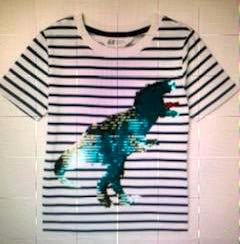
I often talk  (or, write) about the impact of imposing such narrow gender roles on boys, the most visible imposition being clothing.  Those who push the narrow confines of their role face backlash, as the article discusses. So, I get giddy when clothing lines/ retailers do some of the pushing and was ecstatic to find that H & M is now offering reversible sequin t-shirts in the boy section. The content is limited to dinosaurs, sharks, crocodile, Mickey Mouse, super heros, rock bands, NASA, and Paw Patrol. I’d love to see a kitten or an ice cream cone (yum) but for now I’ll order a glittery dinosaur and watch my son’s face light up when he sees his new t-shirt:

IMG953074


The Quiet Son

Blogger mom Cheryl opens her article, How To Get Your Tween/Teenage Son To Open Up To You, with the story of mom who bribed her son with chips to tell her about his day at school (1 fact shared equals one chip given). She talks about the profound truth that boys want to be heard. And she shares ideas to get your boys talking.

She says, “…even though my middle school boys are quiet, I know they want to be heard. A Harvard Study was done over 268+ men’s entire adult life span to determine what made them the happiest. Do you know what the results were? Men were happier when they held strong relationships. Men need people to connect with. And one needs words to build relationships.

So, momma with a quiet son, let’s let this fact empower us. We raise happier boys to become happier men when we teach them to connect through their words. And we can do this. We’re women, after all. I’m pretty sure we invented talking. We can teach our boys to find and use their voice in a natural, healthy way that fits their personalities.”

In general, I try to avoid blanket gendered statements such as “boys are quiet.” But there is truth in that our boys need support in finding their voice and their words. Boys need safe spaces and to be taught emotional vocabulary so they can share their true thoughts and selves and not only that which fits into society’s narrow male gender role.

Check out Cheryl’s ideas for creating these spaces.


“Unicorns, cats, colors, and sparkles are for boys”

Boy Wonder launched and oh boy, was it magical! Many eager parents pre-ordered sparkly rainbow solar system pants, a unicorn shirt, or one of five other pieces designed for our boys. Boy Wonder is Princess Awesome’s sibling brand and the founders are often asked why they made separate girl and boy brands. They explain here: Why Not Gender Neutral.

“….a photo of a boy in a trucks dress might easily be understood as a dress intended to appeal to boys because it has trucks on it. Because as much as we like it or not, trucks are typically thought of as a “boy” thing and primarily only on “boy” clothes.

This is exactly the opposite of what we’re trying to do at Princess Awesome. We started Princess Awesome because we wanted all kids to see trucks, dinosaurs, math, science, trains, and more as just as much for girls as they are for boys. We did that by explicitly putting these topics on clothes usually worn by girls, and we show girls wearing them.

The goal at Princess Awesome is not to make our clothes gender neutral, but to take topics that have been gendered by the world around us and return those topics to neutral by applying them to places where they have been absent in children’s clothing – namely girls’ clothing.

That’s why even as we are thrilled for a boy to wear and love our dresses, we have not shown boys in our photography. And that’s why, when we decided to take the idea of Princess Awesome and apply it to boys’ clothes, we intentionally did not make our new brand gender neutral.

With Boy, Wonder, we want to explicitly say, “Unicorns, cats, colors, and sparkles are for boys just as much as they are for girls.” We want to change the thinking that says otherwise.

If we created one large brand for all of our products, an individual would read their own understanding of gender onto what we offer – just like someone might do with the boy in the trucks dress in their Facebook feed.  “Purple unicorn shirt? For girls. Blue flamingo pants? Also, for girls.” We want to disrupt that reading. We want to deliberately change the traditional, gendered view of the subjects and colors of Boy, Wonder clothes by showing them on clothes worn by boys.”

Here are selections from their debut collection:

IMG_4684.jpg


It’s Dangerous To Be A Boy

A recent article hit the NYT’s opinion column, It’s Dangerous To Be A Boy. It’s an adaptation of Michael C Reichert’s “How to Raise a Boy: The Power of Connection to Build Good Men.”

Reichert says, “Boyhood immerses boys in violence and the bullying that leads to it. High school boys are more likely than girls to have been in a physical fight in the past year and male children are more likely to have been victims of violence. Three types of male violence — violence against women, violence against other men and violence against themselves — are deeply interwoven.”

“Boys don’t come into the world with some inborn tendency toward domination or violence. As the Stanford psychologist Albert Bandura explained: ‘People are not born with preformed repertoires of aggressive behavior. They must learn them.’ The problem is rooted in boys’ socialization, which is characterized by physical discipline, control and disdain for weakness.”

I sigh a deeply pained breath as I read the piece on the couch, my sweet little boy sound asleep on the monitor sitting next to me. My husband asks “what’s wrong?” I respond – “we’re (society) killing our boys and now we have stats to prove it.”

Reichert notes, “With this template for relating to themselves and to the world, it is not surprising that, compared with girls, adolescent boys and young men abuse tobacco at higher rates, drive more recklessly and engage in riskier sex. In the United States, 75 percent of deaths among 15- to 24-year-olds are of boys and young men. Males are more likely than females to die from injuries sustained in car accidents or falls, and from homicides. Especially when the risks of masculinity are compounded by racism and poverty, too many boys do not survive into manhood.”

“Too many boys do not survive into manhood.”

Reichert concludes, “What parents can do, must do, for their sons is never underestimate the power of listening to them, knowing them, and standing by while they navigate the rough waters of boyhood. Behind every boy who avoids being swept away in the current is someone who holds him — and believes in his ability to hold his own.”

Thanks to all of the parents and people in boys’ lives who are trying to make the currents less dangerous and who are holding our fragile boys.