


Sharing one of my recent Facebook posts.
Sharing one of my recent Facebook posts.
CW: Loneliness, Suicide
In my last post I wrote about Francesca Cavallo, an author who wrote about the empowerment of girls and then found herself asking – but where does that leave boys? She and I are greatly aligned on our views of toxic masculinity and that the far too narrow gender role we stuff boys and men into is hurting everyone. However, she is a writer and I am not – her framing of these important topics is masterful and I encourage everyone to check out her work. In a recent substack post she writes:
Real feminism – liberatory feminism – has always been about liberation for all. It’s about building a world in which women, men, and everyone beyond those binaries can be whole. And that work cannot happen if we continue to ignore the specific ways in which men are also harmed by the very structures we seek to dismantle.
The concept that liberation must be for all is so absolute for me, and yet, it’s clear that is not the case for everyone. So, let’s keep talking about this need for liberation, freedom, and health for ALL.
Additional suggested reading/listening:
1)New to manhood at age 35: How one guy is learning about masculinity by Madeline Holcombe for CNN:
“There was never really time to stop and reflect on where I belong in masculinity. It was just do the things to fit in and be accepted,” said Ryan Garcia, a cisgender male cast member of the series. “Being in this series with Ash was kind of a form of therapy where you stopped and actually reflected.” It is normal for anyone, no matter their gender identity, to crave feeling valuable, successful, accepted and connected –– even if men are socialized to put off an image of lone-wolf stoicism, said Judy Yi-Chung Chu, who teaches a class on boys’ psychological development at Stanford University.
The article sites that fewer than half of men report being satisfied with their friendships, and only about 1 in 5 said they had received emotional support from a friend in the last week, according to a 2021 survey from the Survey Center on American Life.
A lot of the traditional societal ideals of masculinity are limiting in personal expression and deep connection, Perez said. Perez and some of the other Try Guys learned a lot about masculinity and how to embrace the best parts during his coming-out journey, while expanding it beyond its traditional limitations.”
2) Modern Love: Why Boys and Men are Floundering, According to Therapist Terry Real:
“In a recent episode of the Modern Love podcast, marriage and family therapist Terry Real argues that traditional models of masculinity are broken and that many boys and men are “floundering” due to a lack of emotional vulnerability and connection. Real contends that men are often taught to suppress their emotions, particularly vulnerability, which can lead to problems in relationships and overall well-being. He emphasizes the importance of reconnecting with emotions and building authentic connections, both with themselves and others.”
I see a pattern emerging – CONNECTION
3) June is Men’s Mental Health Awareness Month
NAMI (National Alliance of Mental Illness) says “there is often a strong focus on men’s physical health — fitness, annual checkups, and heart health — but mental well-being is equally as important because mental health is health! Just as the body needs care and attention, so does emotional and mental well-being. Yet, there is a silent crisis in men’s mental health — one that too often goes unnoticed or unspoken. Tragically, men are nearly four times more likely to die by suicide than women*, underscoring the urgent need to break this silence and seek support.
We are loosing our boys. Things have to change.
Toxic Masculinity is on full and dangerous display right now in the federal government. So when I recently read Francesca Cavallo’s “When Trump won the first time, I launched a book about Rebel Girls. Now, I want to talk to you about BOYS,” I found myself excited – along with a hearty mix of other emotions. Francesca co-authored Good Night Stories for Rebel Girls, which shares the life stories of hundreds of astounding women from all over the world. In the article she shared that since the book was published she had been asked “what about boys?” She said she never answered because she thought males had gotten enough attention, they were the past, and the future was female. But, she asked, “where does this leave boys?” She goes on to say:
“I took an honest look at my prejudice: when I created Rebel Girls I had no problem believing that girls’ “submissive nature” wasn’t nature at all. I knew that it was the culture that we created that convinced us that women weren’t suited for leadership positions.
So why was there a part of me that believed in the “aggressive nature” of boys? Wasn’t I supposed to apply the same principle to them? Could it be possible that – just like we do with girls – we create for boys and men a culture of aggressivity, and apathy… and then we call it nature?“
Sprinkled throughout this blog is my strong believe that we have created a far too narrow general role for boys, that hurts everyone, and it was thrilling to see the way Francesca spelled that out. She set out to write a book that empowered boys and offers both boys and girls “a wider interpretation of masculinity.” She studied masculinity from multiple angles and was disturbed by her findings. Excitingly, she wrote Stellar Stories for Boys of the Future which will drop March 20th! Using her research she crafted tales that will “help children grow up with a much healthier idea of what becoming men means.” What spoke loudest to me is her sharing that the tales don’t condemn masculinity, but they are about “reclaiming it as a space full of care, honesty, and honor. As a space full of light, connection, and love.“
Check out and support Franscesa’s new site which will share the journey of her writing Stellar Stories for Boys: Boys of the Future.
Thank you for being here, more to come.
Like many of you, I recently saw the Barbie movie. I imagine many people watching were doing so through a feminism lens. Me, I had my “toxic masculinity” glasses on. So, the article “What Barbie Gets Right About Male Psychology: or, learning to be kenough” in Psychology caught my eye. Dr Balaisis, the author, shares a treasure trove of important insights, he says:
“Watching the “Barbie” movie over the weekend, I was surprised by the relatively nuanced portrayal of masculinity, one which resonated with real issues and concerns that I have seen often in my clinical practice……This feeling is not too dissimilar to the experience that I see in my practice, where men often experience a greater degree of rejection and isolation in a relationship as a result of a perceived lack of attention or affection from their partner or spouse. The film thematizes this dynamic nicely by showing Ken’s drift into a desire for masculine dominance and “patriarchal” expression; if he can’t have Barbie’s attention and esteeming gaze, he can at least exert his wish for assurance via dominance and other claims of power and authority over other men, women or objects (his mojo dojo man cave).
Clinically speaking, what we see here is the rapid move from shame to anger: Ken experiences deep shame which gets re-routed into resentment and angry expressions of masculinity. If this were couples’ therapy, we would want to give voice to the shame, and instead of indulging the shame through anger, work to find ways to articulate this desire and translate it into perhaps a wooing or seduction that works for his partner and himself. Or, we’d want to find ways to manage and cope with the difficulty of feeling alienated from her gaze. In other words, we’d want to prolong Ken’s capacity to stay with the feelings of shame instead of converting them into a resentment man cave.”
There is so much shame within the narrow male gender role we have created and inflict on our boys and men (spoiler – this also hurts girls and women). Ken perfectly portrays this, while also offering hope. At the end of the movie he is supported in taking a self-discovery journey (while Barbie will take her own separate journey). Giving space to boys and men to discover their authentic self outside of “the narrow gender role” will lead to healthier outcomes – for everyone.
I recently stumbled on this article: “It’s Maddening Gender is Still Not Central in Mass Shooting Debate.” It started with “how many more lonely, alienated, disconnected, (usually) white males perpetrating murder and then suicide need we witness before admitting the irrefutable fact that the shooters are all male?“
The article goes on to say, “we have to start in preschool, carefully attending to how boys are socialized. We must cultivate their emotional intelligence. Who would deny the value of educating boys to examine their inner lives; to talk about their feelings?”
I could feel my chest tighten with familiar anger; the pervasive refusing to educate boys on emotional intelligence is indeed maddening — and the consequences are catastrophic.
Rob Okun, the article’s author introduced an interesting and timely concept- how we treat our boys, the narrow male gender role we brutally enforce, is a virus. A virus that needs a vaccine. “The young men who slaughtered children in Uvalde, and African Americans in Buffalo, were raised in a society ill-equipped to prevent them from being infected with a virulent strain of TGV, tough guy virus. Any vaccine being developed to treat it must include healthy male antibodies if we’re ever to reach herd immunity and prevent mass shootings. And, in order to create those antibodies, the CDC must be authorized to lead a national campaign to reinvent manhood, beginning with boys.”
Onward to spreading a vaccine.
A recent NYT article, “What is Bigorexia,” describes “Bigorexia” as “a form of muscle dysmorphia exhibited mostly by men and characterized by excessive weight lifting, a preoccupation with not feeling muscular enough and a strict adherence to eating foods that lower weight and build muscle. The condition can also lead young men to become obsessed with their appearance, checking themselves in the mirror either constantly or not at all.”
The father of a boy obsessed with growing his muscle mass was interviewed and explains he relates to his son. Growing up he would see buff men in magazines and wanted to look like them – he would come to realize those bodies were unattainable. But, unlike dad, this boy has social media and has taken his muscle building quest to TicTok — the more muscle, the more followers. “For many boys and young men, muscle worship has become practically a digital rite of passage in today’s beefcake-saturated culture.”
The article references researchers and doctors who describe this obsession with muscular bodies as having serious consequences on boys’ self-esteem – “with the never-ending scroll of six packs and boy-band faces making them feel inadequate and anxious.”
“And while there has been increased public awareness about how social media can be harmful to teenagers — spurred in part by the leak of internal research from Facebook showing that the company hid the negative effects of Instagram — much of that focus has been on girls.”
The article discusses the impact on boys social and interpersonal skills – skipping family meals, parties, etc to hit the gym. With one boy saying “your only new friends are the weights.” We must talk about body image, social media, societal pressure, self-esteem when it comes to boys with the same fervor as we do girls. We owe it to our boys.
My son is a fan of nail polish. The other day he excitedly went with me when I got a pedicure and selected red, yellow, purple, and blue polish to be painted on his toes. The next day, someone in his life whom he looks up to told him that “only girls wear nail polish.” When he relayed this to me my blood boiled, I actually think I saw red, and plenty of sadness was mixed in with the rage. WHY?! Why does color, self-expression, fashion, self-care (things associated with nail polish) belong to girls?
He told me he wanted to wear sneakers to school the next day so no one saw and asked when the polish rubs off (the rage I felt towards this person who broke his spirit increasing with each word my son uttered). I don’t know if I handled the situation well, as a mom I question everything I do, always. My first instinct was to hop on the internet and show him the millions of pictures of men and boys wearing polish. I selected a wide range of ages, races, fashion styles, etc when picking which pictures to show his worried little face. After a handful of pictures he felt a bit better.
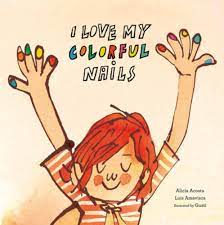
I then took to Facebook, where a number of friends posted supportive and validating comments, links to videos or podcasts, and pictures of themselves or a man in their own life wearing nail polish. Next, I looked for a children’s book. If you have read any of my other posts, you know that I often turn to books to help me navigate conversations on challenging topics with my son. I found “I love my colorful nails” by Alicia Acosta and Luis Amavisca, illustrated by Gusti. Whew.
I know this will come up over and over and over again. People will tell my son to fit into a narrow male gender role and for anything deemed outside of that role people will make their disdain known. SO many things are outside, apparently nail polish, kindness, cupcakes, kittens, the color pink. What message does it send to our sons when we tell them something colorful, happy, and fun belongs only to girls? Spoiler, it’s toxic masculinity and devastated mental health.
Since I’m a pissed off and extremely concerned mama and not a writer, I’ll share this from “Boys Wearing Nail Polish: Is It A Big Deal?”
“No matter how hard people work to shatter gender norms, break stereotypes and try to raise their children to be able to express themselves however they choose, there are always critics and naysayers who are quick to criticize. Any parent who has ever been side-eyed for letting their son wear a dress or paint their nails, or who lets their daughter choose a ‘boy’ toy to play with knows how frustrating these antiquated views on how children should dress, act and behave simply based on their sex can be.
Just last week a 17-year-old Texas boy was given an in-school suspension because he violated his school’s dress code by daring to wear nail polish. Trevor Wilkinson publicly called out his school for their sexist dress code (the nail polish ban only applies to males,) then created a Change.org petition to lobby the school to change it. That petition currently has almost 240,000 signatures.
Wilkinson isn’t the first male to be judged and ridiculed for choosing to wear nail polish. Two years ago Aaron Gouveia’s 5-year-old son Sam was mocked and teased by classmates because he wore nail polish to school. Not only did Aaron paint his nails in solidarity with his son, but New England Patriots star Rob Gronkowski took to Twitter to assure the young boy that he should feel confident doing whatever made him happy and to stay true to himself.”
Thanks for lending your voice Gronk.
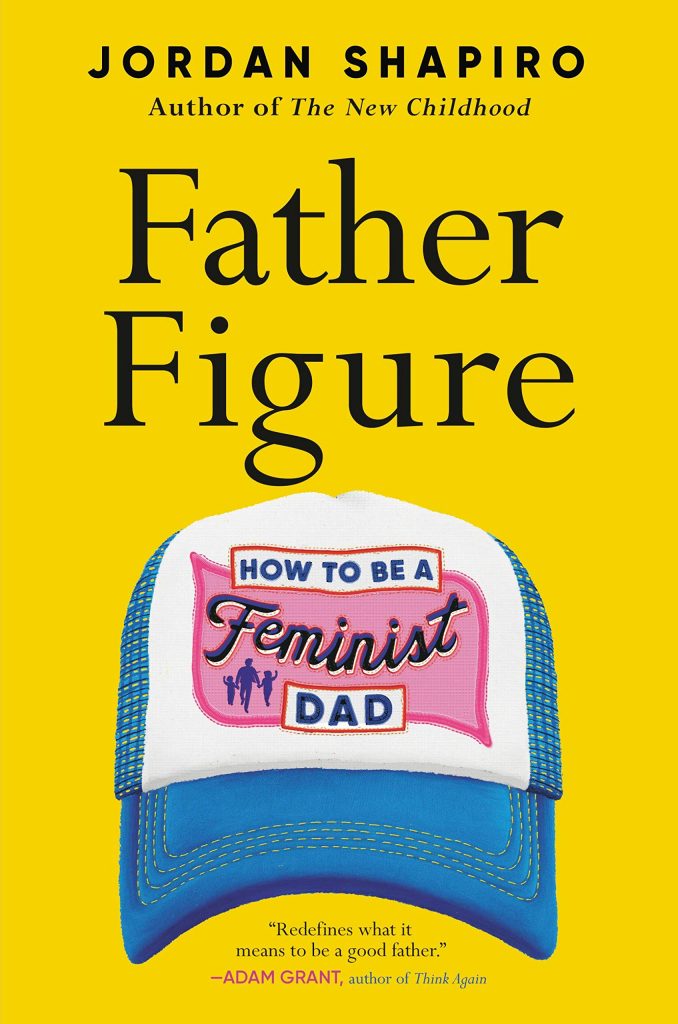
Thank you Ms. Magazine for your recent piece by Jordan Shapiro, “Fatherhood Identity Is In Urgent Need of a Feminist Revision.” I knew I was in for some good reading with a tag line “patriarchy is a problem for everyone – whether you’re a subjugate or a beneficiary. That’s why today’s fathers need to engage in radical feminist self-intervention.” An interesting historical interpretation of the social construction of genders is given, used to support the notion that our modern made-up gender roles hurt everyone. Before exploring what a feminist dad is, bell hooks’ definition of feminism is provided: “’Simply put, feminism is a movement to end sexism, sexist exploitation, and oppression.’ I like how straightforward this statement is—not complicated, scary or unwelcoming. It also doesn’t suggest a battle between men and women. Feminism absolutely begins with a forceful criticism of the binary gender–based hierarchy that allocates male privilege, permits dominance and violence, and promotes misogyny and homophobia. But hooks’s definition is open-ended enough to leave room for us to acknowledge that patriarchy can also hurt men. It strips them of certain rights, challenges their self-esteem, and pressures them to adopt sexist identity narratives. Women are not the only victims of sexism, and men are not the sole perpetrators. Patriarchy is a problem for everyone—whether you’re a subjugate or a beneficiary.”
Shapiro’s book Father Figure: How To Be A Feminist Dad is on my summer reading list. I hope you’ll add at least one book to your list that challenges hurtful gender roles and also offers hopeful ideas for progress and healing. Please let me know what you read (or listen to)!
For more reading, I’ve written about him before, I highly recommend Teacher Tom: Teaching and Learning From Preschoolers. In his recent piece “Thinking Outside The Man Box,” Teacher Tom describes his experience with having long hair. His hair length meant sometimes being mistaken for a girl. And, he says “well before I was a teen, I knew that to be compared, in any way, to a girl, required either an angry response or a comeback insult that was worse — and there were few things worse than being called “a girl” or “a pansy” or “pussy.” As we got older, homophobic slurs were added to the mix. To be a “man” meant, as far as I could tell, doing whatever you could to distance yourself from femininity, which was associated with most emotions other than anger. Fear was too girly. Sadness, too prissy. Even indecisiveness or thoughtfulness or basic kindness could make you a target, for your peers as well as adults. Reflecting on my experiences growing up as a boy, I’m horrified by how much of my waking energy was spent on the project of avoiding the shame of being labelled as not masculine enough. And, to be honest, even today I’m not entirely sure what masculinity means except as a reaction against femininity.“
Now the mom of 2 little boys I constantly think about how I can support them in embracing all human emotion, not just “anger.” This contemplation and goal is HARD. Harder than I could have ever imagined when I first learned my growing baby bump was a boy. Every. single. day. I navigate the narrow gender role assigned to boys, whether I’m purchasing clothes or defending my 5 year old from not wanting to jump off the big rock or join in the soccer game.
Complementing Shaprio’s Feminist Dad, teacher Tom references Sonora Jha’s How to Raise a Feminist Son. Jha writes “In many cultures, we rob boys of the range of human emotions and connection . . . And how are boys often trained in “masculinity?” By distancing themselves from femininity.”
With our boys ability to explore and express their feels, to connect, to be themselves, essentially just to exist in any way outside of their narrow gender role on the line, we must be vigilant in defining the problem and implementing solutions. Please, in addition to your reading lists, share your ideas and commitments. Hoping to hear from you!
This is my first post as a mom of two. I now have 2 little boys who are counting on me to support them in exploring their authentic selves and build up the courage to be that self. When I need parenting support, I turn to children’s books. So I was excited to recently stumble on a write-up of Ben Brook’s: Stories for Boys Who Dare To Be Different: True Tales of Amazing Boys Who Changed the World Without Killing Dragons. The title already had me hooked and then I read on: “Boys can be anything they want to be! This timely book joins and expands the gender-role conversation and gives middle-grade boys a welcome alternative message: that masculinity can mean many things.

In recent years there has been a flood of books to inspire girls and make sure they know they can be anything. These books are important and we’ve read several in my home. I welcome a flood of books that tell stories of boys (and men) breaking out of the traditional and highly enforced male gender role (eg. dragon slayer). I invite you to share any titles that fit this bill with me!
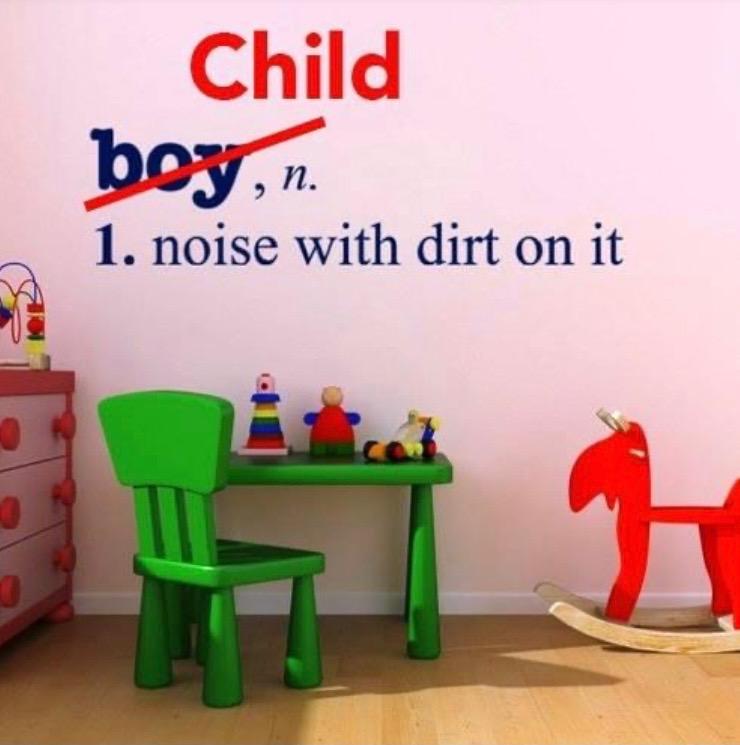
Thank you A Mighty Girl for recognizing International Mud Day for ALL kids!
 whatsaboymom